
Lot 23
A Great War Canadian Field Artillery, Died of Wounds, Trio awarded to Driver Arthur Paul Methuen
Military Medals, Decorations and Orders On Land, at Sea, in the Air | E114
Auction: 7 September 2023 at 10:00 BST
Description
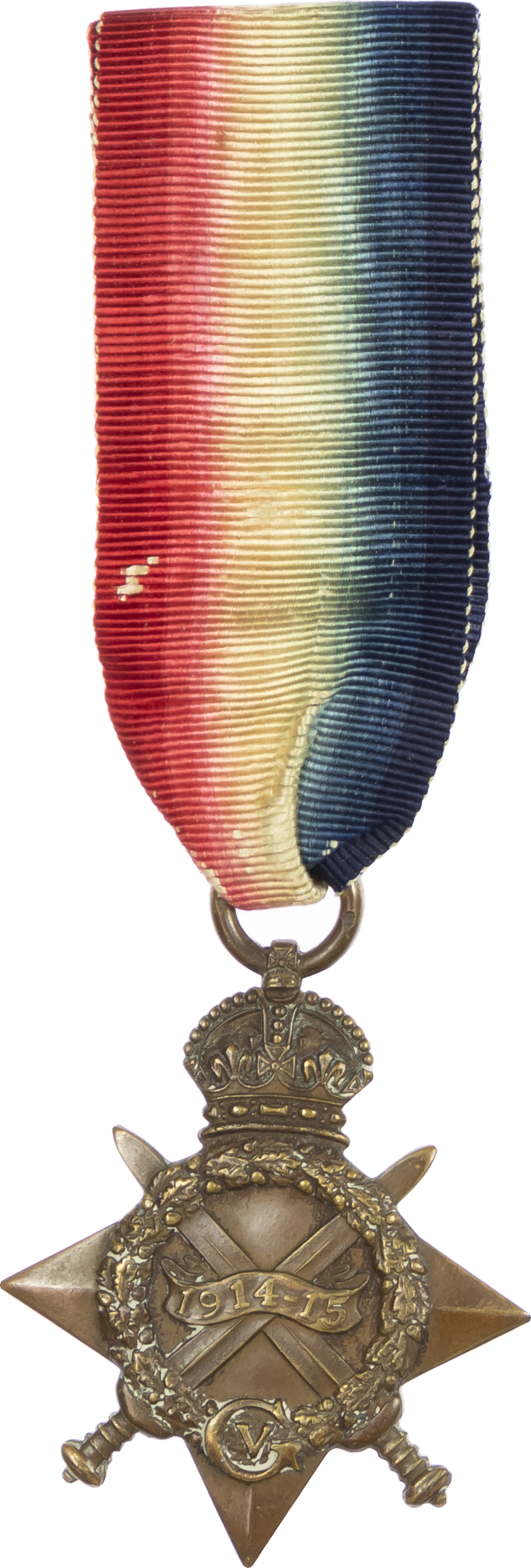
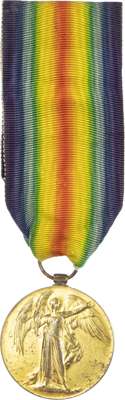
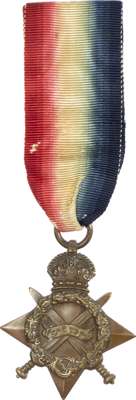
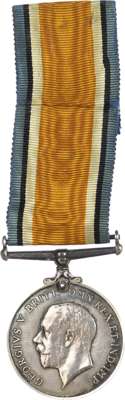
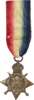
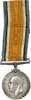
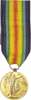
A Great War Canadian Field Artillery, Died of Wounds, Trio awarded to Driver Arthur Paul Methuen who lost his life on the 20th of July 1918, comprising 1914-15 Star, (42716 Gnr: A.P. Methuen. Can: Fd: Art:), 1914-1920 British War and Victory Medals, (42713 Dvr. A.P. Methuen. C.F.A.), toned, fair. (3).
Arthur was born at Puncknowle Rectory, near Bridport in Dorset on the 19th of November 1892, the eldest son of the Reverend St John Frederick Methuen, Rector of Vange, and Louisa Elizabeth (nee Champion), later of Vange Rectory, Pitsea in Essex. He was christened by his father at the Church of St Mary the Virgin, Puncknowle on New Year’s Day 1893.
He was educated at Chigwell School, at Edgeborough House School, Guildford and at the King’s School, Canterbury from May 1907 to July 1910, after which he worked as a clerk for a fur broker.
In March 1912, he went to Canada where he settled in Aylmer, Ontario as a farmer and served for two years in the Canadian Militia. On the outbreak of war, he enlisted into the Army at Valcartier Camp, Quebec on the 24th of September 1914; upon medical examination, it was recorded that he was 5’ 9” tall, with brown eyes, black hair and a dark complexion. He was one of the first six men to arrive at Valcartier Camp, after which he was posted to the 3rd Brigade, Canadian Field Artillery Ammunition Column.
Arthur was born at Puncknowle Rectory, near Bridport in Dorset on the 19th of November 1892, the eldest son of the Reverend St John Frederick Methuen, Rector of Vange, and Louisa Elizabeth (nee Champion), later of Vange Rectory, Pitsea in Essex. He was christened by his father at the Church of St Mary the Virgin, Puncknowle on New Year’s Day 1893. He was educated at Chigwell School, at Edgeborough House School, Guildford and at the King’s School, Canterbury from May 1907 to July 1910, after which he worked as a clerk for a fur broker. In March 1912, he went to Canada where he settled in Aylmer, Ontario as a farmer and served for two years in the Canadian Militia. On the outbreak of war, he enlisted into the Army at Valcartier Camp, Quebec on the 24th of September 1914; upon medical examination, it was recorded that he was 5’ 9” tall, with brown eyes, black hair and a dark complexion. He was one of the first six men to arrive at Valcartier Camp, after which he was posted to the 3rd Brigade, Canadian Field Artillery Ammunition Column.
He was wounded in the left hand at Vimy in July 1917 and was admitted to No. 8 Red Cross Hospital. Invalided back to England on board the Hospital Ship ‘Stad Antwerpen’, he was admitted to Wharncliffe War Hospital at Sheffield on the 1st of August 1917. The next day, they recorded: ‑ ‘Splinters of wood in left hand and subsequent sepsis. Incised and drained. Wound nearly healed. Hot soaks and Lysol dressing.’ He was transferred to the Canadian Convalescent Hospital at Woodcote Park, Epsom on the 28th of August, where he was declared to be free from the infection in his hand on the 6th of September and discharged to duty on the 12th of September 1917.
He returned to France on the 30th of November 1917, where he joined the Canadian Artillery Pool. The following day, he was arrested for drunkenness, and, on the 8th of December, sentenced to fourteen days of Field Punishment No. 2, also forfeiting 21 days’ pay. He was posted to 20th Battery, 9th Brigade Canadian Field Artillery on the 11th of January 1918 and joined them in the field two days later.
On the 19th of July 1918, he was severely wounded in the left leg by a shrapnel, following a direct hit from a shell during a period of heavy shelling at Doullens. He was evacuated to 56 Casualty Clearing Station where he died the next day, following an operation to amputate his left leg.
His Commanding Officer wrote: ‑
‘He was fatally wounded on July 19th while on duty by a direct hit during heavy shelling. He was removed at once to the Casualty Clearing Station and everything was done to save him, but the shock was too great, and he passed peacefully away at 1am on the 20th, aged 25 years. He died the noblest of deaths, in the service of his country and was a splendid type of Britain’s sons. I feel his loss keenly as he always set an example to his comrades in cheerfulness, devotion to duty and high personal standard and was truly beloved by his fellow gunners, who will miss him greatly.’
He is commemorated on the War Memorial at Vange, Essex.
Sold with CWGC information, 48 pages of Copy Canadian Service Papers, extract from The King’s School Canterbury Roll of Honour, which includes a copy photograph of Driver Methuen in uniform